
The DC Women's Hiking Group will be snowshoeing at Brewster Farm on Tues., Feb. 15th and Thurs., Feb. 17th. Meet at 9:30am.
A chance to see the farm in the wintertime.
Park at the farmhouse right on Lounsbury Rd.
Monday, February 14, 2011

Sunday, February 13, 2011
Hibernation - A Special Sleep

Animals in true hibernation can be moved around or be touched without any response. This state is frequently described as sleep but it is far different than regular sleep. In normal sleep, an animal can wake up quickly. With hibernation, the animal appears dead. To wake it takes a very long time; and once aroused, it can’t return. To prepare for hibernation, an animal will eat more than usual in the fall. Instead of putting on normal fat, a special fat is produced which will use as fuel during hibernation. As their body is preparing for hibernation, the animal will get sluggish. Scientists believe body weight determines when it will bed down. Once it enters hibernation, its body temperature drops very low so that it almost matches the outside temperature. Its heart rate and breathing will slow tremendously. All of this conserves energy. It will no longer defecate or urinate as its body will reprocess the liquids. Nor will it lose muscle strength. The whole process is similar to a controlled state of hypothermia but without damage to cells, organs or brain. It is believed an internal clock and possibly hitting a critical level of fat reserves causes the animal to wake up in the spring. In CT only the woodchuck (aka groundhog) & the brown bat hibernate. Some scientists now call this process “complete torpor” and the time period the animal is “asleep” hibernation. Regardless, it is nature’s adaptation to prolonged cold and lack of food. (Photo - Hibernating bats www.arkive.org)
Monday, February 7, 2011
Torpor? Ever Hear of it

This morning a chipmunk’s head poked out of a hole in the snow. Isn’t it supposed to be snuggled down for a long winter sleep? Science is ever changing and research into the wintertime habits of animals has been opening new windows onto how some species conserve energy while enduring winter. Animals thought to be hibernators (i.e. chipmunks & bears) were actually somewhat alert and semi-active during the winter. Bears give birth in the winter, a feat hard to do while asleep. Thus enter torpor, a state of physical inactivity usually accompanied by a slowdown in body functions. When an animal is in torpor, it is sluggish and less alert. Sometimes its heart rate and body temperature will decrease slowing its metabolism. How long it stays this way is determined by how much body fat it has to live off and genetics. Bears can last an entire northern winter, raccoons a couple of weeks, opossums only a couple of days. Some animals go in and out of it frequently. It has been discovered that hummingbirds go into torpor nightly. This research has scientists redefining the term hibernation and discussing degrees of torpor. In the end, it is all about how animals have developed ways to conserve energy so that it can continue to live and thrive despite the lack of food. Next – Hibernation (Photo BioKIDS - Phil Myers University of Michigan)
Saturday, February 5, 2011
Migration isn't just heading south

In New England, the mention of migration has people thinking of fall's noisy flocks of Canada Geese heading southward. The reason behind migration is to move to a new location where there is better food, shelter, and water. Conditions caused by changing seasons are a major force behind seasonal migration. But it is not the only type. Birds’ heading south is latitudinal migration, the movement of animals north and south. Attitudinal migration is the movement of animals up and down major land features such as mountains. By physically moving north and south globally or up and down a mountain, animals are trying to improve their living conditions. Reproductive migration is the movement of animals to bear their young. Some areas provide more food, shelter and protection for rearing young. Or the young of a species requires different living conditions than the adult. Salmon return to fresh water to spawn while the American eels return to the sea. Complete migration is when virtually all of a species, like our hummingbirds, leave their breeding grounds in non-breeding season. Partial migration is when only some of a species, like our red-tailed hawks and herring gulls, leaves the breeding grounds. The herds of wildebeest roaming the Serengeti is nomadic migration. For some species, the journey is not necessarily done by one individual but by generations. The monarch butterfly winters in Mexico. However, not all individuals complete the round trip from CT, but their offspring do. Climate change and/or resource depletion and/or overpopulation are factors in removal migration. In this case, the animals do not return. For our wildlife, habitat fragmentation contributes greatly to this. For humans, removal migration is a major factor in population shifts. Next - Torpor
Thursday, February 3, 2011
How do animals manage to survive winter?
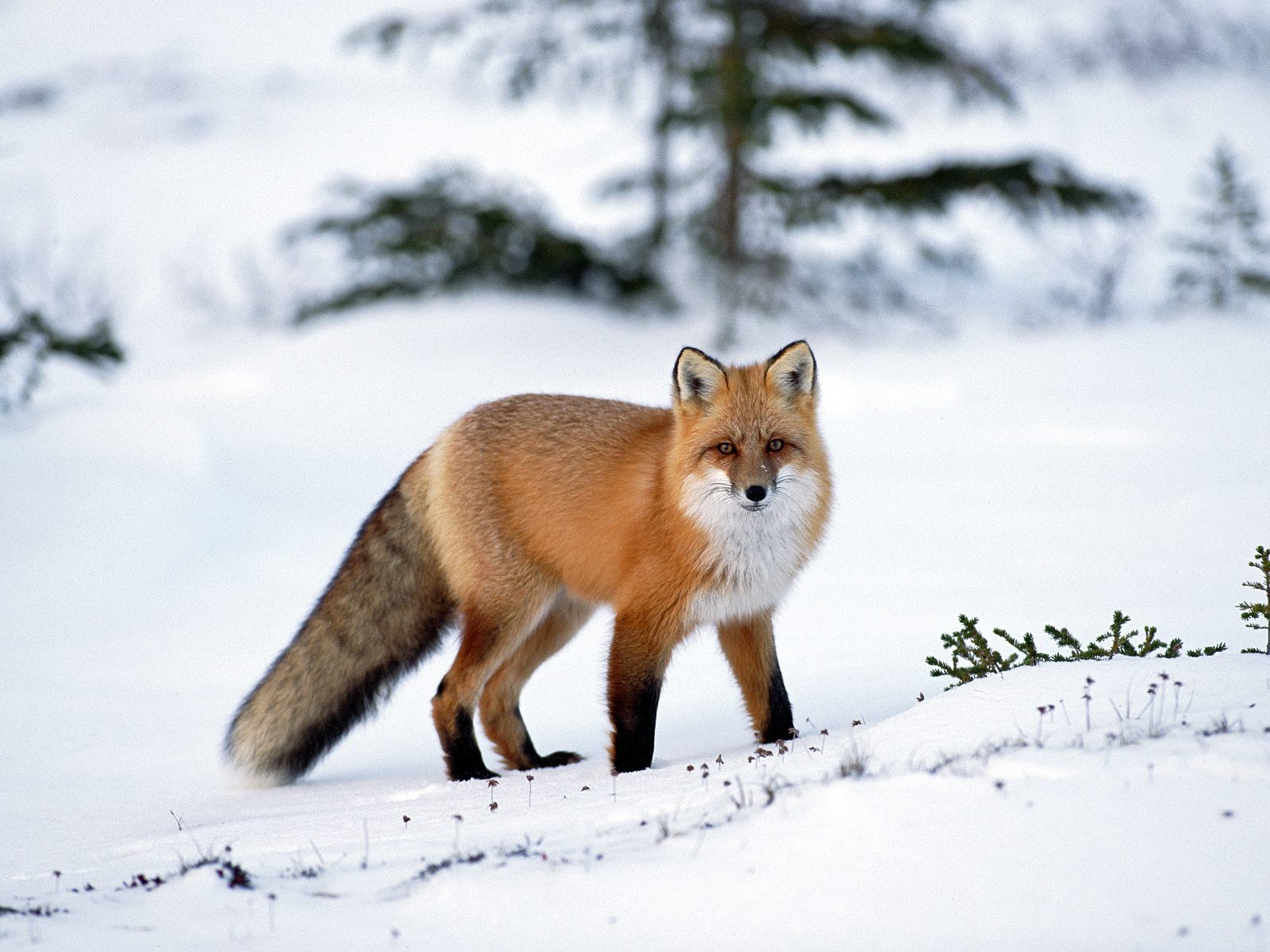
Today the air was clear and cold, while ice covered the trees and encased the snow making it white cement. But above the glistening trees, a flock of vultures rode the thermals and two hawks darted by with an unwanted escort of crows. Suddenly a pair of foxes raced across the field. How do they manage to survive in all this ice and snow? Nature has developed basic strategies to enable animals to deal with winter – endurance, migration, torpor, hibernation, estivation (reptiles & amphibians), and diapause (insects). Endurance means simply to “tough it out”. Deer, the birds visiting your feeders, the foxes and their small rodent prey, are examples of animals that are active all winter long. Throughout the centuries of evolution, they have adapted ways to survive winter. Some change their diet. Deer and rabbits switch from leafy greens to dry weeds and bark. For the deer this involves a gradual change in their stomach’s bacteria. Others, like the beaver and red squirrel, cache (store) food to munch on. Mammals take on a “winter” layer of fur that provides more insulation and sometimes camouflage. The short-tailed weasel changes from brown to white. All put on a thicker layer of fat for the extra energy required to fight the cold, look for food and remain safe. With the exception of birds, most rely on their sense of smell to locate food. Squirrels are sniffing out the nuts they hid in the fall. As are the weasels, foxes, coyotes and bobcats sniffing out their prey. Winter is the ultimate survival test for all who must endure and for some it is the last one. Next - Migration
Wednesday, February 2, 2011
Phil's 2011 Prediction
Happy Groundhog Day! This m orning, Punxsultawney Phil emerged from his stump in Gobbler's Knob to a admiring crowd of "thousands". His handlers, all stately gentlemen in top hats and tails, listened intently to his "Groundhogese". Phil only focused on his duty and not the treats being presented to him, spoke in silent whispers. There are two scrolls - one declaring six more weeks of winter and the other an early spring. His handlers listened intently as he directed them to the proper scroll. Then as if proclaiming a kingly declaration, the prediction was read, "As no shadow could be seen on this beautiful day in Punxsultawney, it is hereby declared that spring will come early this year!
Subscribe to:
Posts (Atom)

 Posts
Posts

