
The DC Women's Hiking Group will hike Tues., Sept. 2nd and Thurs., Sept. 4th at
Saugatuck Falls Natural Area in Redding, CT.
The entrance is located between
mail box # 65 and 73 on Diamond Hill Road in Redding. Follow
straight in until you see the large sign (entrance marker) on your left.
Meet at 8:30am.
Monday, September 1, 2014

Friday, August 8, 2014
The Green Corn Supermoon
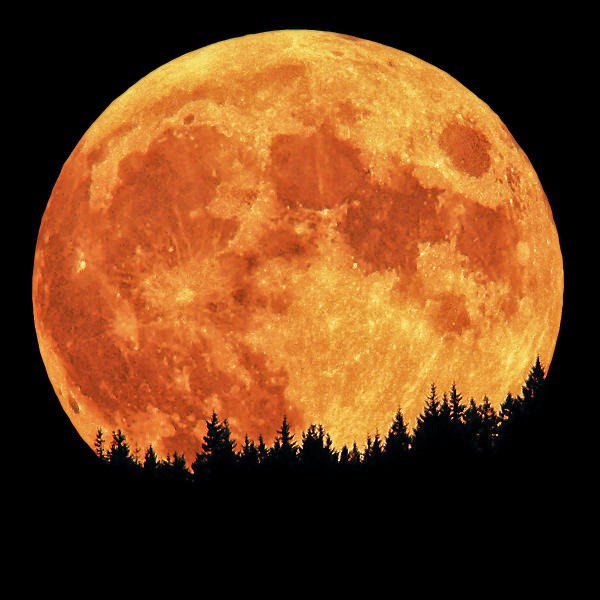 For those who missed the
July 12 rendition of a supermoon, your second chance is coming up. It will happen on Sunday, Aug. 10th
at 2:09PM ET. It will continue to look
“super” throughout Sunday evening and into early Monday morning. This will be the largest and brightest moon
of the year. A supermoon occurs when the
moon becomes full on the same days as its perigee, when it is closest to the
earth in its orbit. In his case a mere 221,796 miles away.
This is a fairly common occurrence but it does make for a good “Moon
Media Event”. This month’s moon will appear 12% bigger and
30% brighter than the January 2014 event.
However, it is not the brightest of the supermoons. That occurred on March 19, 2011 at 14% bigger;
a fullness that won’t occur again till 2030.
However, to the casual observer, it is hard to tell this minor difference. To view
a supermoon for its maximum effect, look to the distant horizon making sure you
have objects such as mountains or buildings in the foreground. As the moon rises behind these objects, it
creates an optical illusion, which makes it look even larger to the naked eye. Don’t worry if you miss it, the moon will
appear full for several more days. However, if
you miss it all together, the next supermoon will occur on Sept. 28, 2015. Enjoy the night sky! (Photo by David Haworth - Nightskyinfo.com)
For those who missed the
July 12 rendition of a supermoon, your second chance is coming up. It will happen on Sunday, Aug. 10th
at 2:09PM ET. It will continue to look
“super” throughout Sunday evening and into early Monday morning. This will be the largest and brightest moon
of the year. A supermoon occurs when the
moon becomes full on the same days as its perigee, when it is closest to the
earth in its orbit. In his case a mere 221,796 miles away.
This is a fairly common occurrence but it does make for a good “Moon
Media Event”. This month’s moon will appear 12% bigger and
30% brighter than the January 2014 event.
However, it is not the brightest of the supermoons. That occurred on March 19, 2011 at 14% bigger;
a fullness that won’t occur again till 2030.
However, to the casual observer, it is hard to tell this minor difference. To view
a supermoon for its maximum effect, look to the distant horizon making sure you
have objects such as mountains or buildings in the foreground. As the moon rises behind these objects, it
creates an optical illusion, which makes it look even larger to the naked eye. Don’t worry if you miss it, the moon will
appear full for several more days. However, if
you miss it all together, the next supermoon will occur on Sept. 28, 2015. Enjoy the night sky! (Photo by David Haworth - Nightskyinfo.com) Saturday, June 28, 2014
July 2014 Constellation of the Month – The Summer Triangle
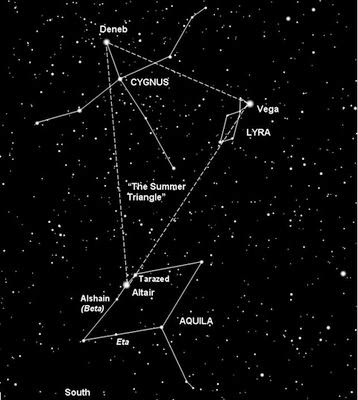 Our July 2014 Constellation of the Month is
not one of the official 88 constellations, but it is nonetheless a prominent
and memorable shape made by stars. The
Summer Triangle is comprised of the brightest stars of 3 constellations. You can't miss them; they are the brightest
stars in the East an hour or two after sunset, about midway between the eastern
horizon and overhead.
Our July 2014 Constellation of the Month is
not one of the official 88 constellations, but it is nonetheless a prominent
and memorable shape made by stars. The
Summer Triangle is comprised of the brightest stars of 3 constellations. You can't miss them; they are the brightest
stars in the East an hour or two after sunset, about midway between the eastern
horizon and overhead.
The brightest of the 3 stars – Vega, in the
constellation of Lyra (the Harp) – is the easternmost one. To the west and north is Deneb, in the
constellation Cygnus (the Swan, also known as the Northern Cross). To the west and south of Vega is Altair in
the constellation Aquila, the Eagle.
The Summer Triangle is a good
non-constellation star pattern ("asterism") to get to know. (Asterisms can also be well-known parts of constellations, e.g., the Big Dipper is a part of the constellation Ursa Major). The Summer Triangle is visible about half the year, and it can
be useful as a starting point for finding other constellations -- as we'll describe
in coming months.
Vega is an important star, because it was
used to define the zero point in the scale used to specify the apparent
brightness of stars – the magnitude. I
say "apparent" brightness, because it describes how bright a star
appears to us on earth. A very bright
star (one with a large "absolute" brightness) which is very far away
can appear to us as less bright than a star of average brightness which is much
closer to earth. "Close" in
astronomical terms, could be 50 trillion miles away.
So, Vega was defined as having a magnitude of
0. And the brightness of other stars was
measured in relation to that. In order
to avoid very large numbers, the magnitude scale is logarithmic, like the
Richter scale for earthquake intensity.
A magnitude 1 star is 2.5 times as bright as a magnitude 0 star. And a magnitude 2 star is 2.5 times fainter
than that. So a magnitude 2 star is 2.5
x 2.5 (6.25) times fainter than a magnitude 0 star.
Stars brighter than 1.5 magnitude are called
1st magnitude, from 1.5 – 2.5 are 2nd magnitude and so
on. The naked eye in Ridgefield can
probably see no fainter than 4th
magnitude, due to light pollution. The other two stars in the Summer Triangle –
Altair and Deneb – are magnitudes 0.77 and 1.2, respectively. So they are also 1st magnitude
stars. By way of comparison, the stars
in the Big Dipper are magnitude 2 stars.
Tuesday, June 24, 2014
Be Prepared!

Saturday, June 21, 2014
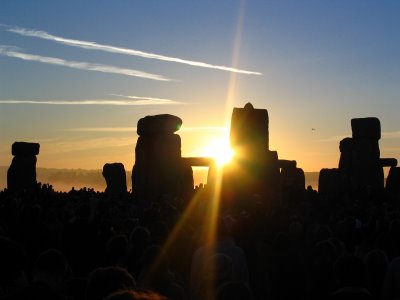 Today is the “Longest” day of the year - the Summer Solstice. Called a
variation of Midsummer by most northern cultures, this marks a day of
great celebration. When man determined time by the sun and moon, midsummer was the middle of the growing season. Most celebrations took
on a joyous quality. At Midsummer food was easier to find, herbs could
be gathered and crops had been planted in anticipation of a bountiful
harvest. It was considered by some cultures a good time to wed as it
fell between the intense work of planting and harvesting of crops. The
“downtime” could be spent in preparation and celebrations. In China it
was a time of balance. Midsummer celebrated the earth, the feminine, and
the yin forces. It complemented the winter solstice which celebrated
the heavens, masculinity and yang forces.
Today is the “Longest” day of the year - the Summer Solstice. Called a
variation of Midsummer by most northern cultures, this marks a day of
great celebration. When man determined time by the sun and moon, midsummer was the middle of the growing season. Most celebrations took
on a joyous quality. At Midsummer food was easier to find, herbs could
be gathered and crops had been planted in anticipation of a bountiful
harvest. It was considered by some cultures a good time to wed as it
fell between the intense work of planting and harvesting of crops. The
“downtime” could be spent in preparation and celebrations. In China it
was a time of balance. Midsummer celebrated the earth, the feminine, and
the yin forces. It complemented the winter solstice which celebrated
the heavens, masculinity and yang forces. Now with modern technology driving our lives, it is barely noticed. However, the natural world will be resetting its internal clocks to reflect the eventual slide toward the cold season. Now is the time for second clutches of eggs or litters and for the young to start their intense survival training. Sunlight drives the natural rhythm of plants. The work of photosynthesis has reached its peak and now food production will decline. With the gradual decrease in sunlight some plants will start setting buds for the next growing season. We owe this all to the 23.5º tilt of Mother Earth. It causes sunlight to be unevenly distributed over our planet’s surface as it orbits around the sun. This creates the seasons – the main driver behind the Rhythm of Life. (Originally posted 6-20-12)
Thursday, June 12, 2014
Come join the DC Women's Hiking Group for our last week of hiking before the summer break!
We will hike Tues., June 17th at Pootatuck State Forest in New Fairfield, CT.
Take 84 East to Exit 5 merge onto Downs St. which turns into North St. Continue onto CT 37N (Padanram Rd) which turns into CT 37N (Pembroke Rd). About 2 miles past the interesection for 37 and 39, make a slight right onto Pine Hill Rd. Continue for about 2 miles. Pheasant Dr. will be on the right. Take the next road on the right. It will be right before mailbox #169.
Parking lot is at end of the road at trailhead.
Please bring a picnic lunch for after the hike.
We will hike Tues., June 17th at Pootatuck State Forest in New Fairfield, CT.
Take 84 East to Exit 5 merge onto Downs St. which turns into North St. Continue onto CT 37N (Padanram Rd) which turns into CT 37N (Pembroke Rd). About 2 miles past the interesection for 37 and 39, make a slight right onto Pine Hill Rd. Continue for about 2 miles. Pheasant Dr. will be on the right. Take the next road on the right. It will be right before mailbox #169.
Parking lot is at end of the road at trailhead.
Please bring a picnic lunch for after the hike.
Please note: Meet at 8:45am for this hike.
We will hike Thurs., June 19th at Seth Low Pierrepont State Park.
Entrance and parking is off Barlow Mountain Rd. across from Scotland and Barlow Mountain Elementary Schools.
Meet at 8:30am.
Saturday, June 7, 2014
June 2014 Constellation of the Month -- Draco
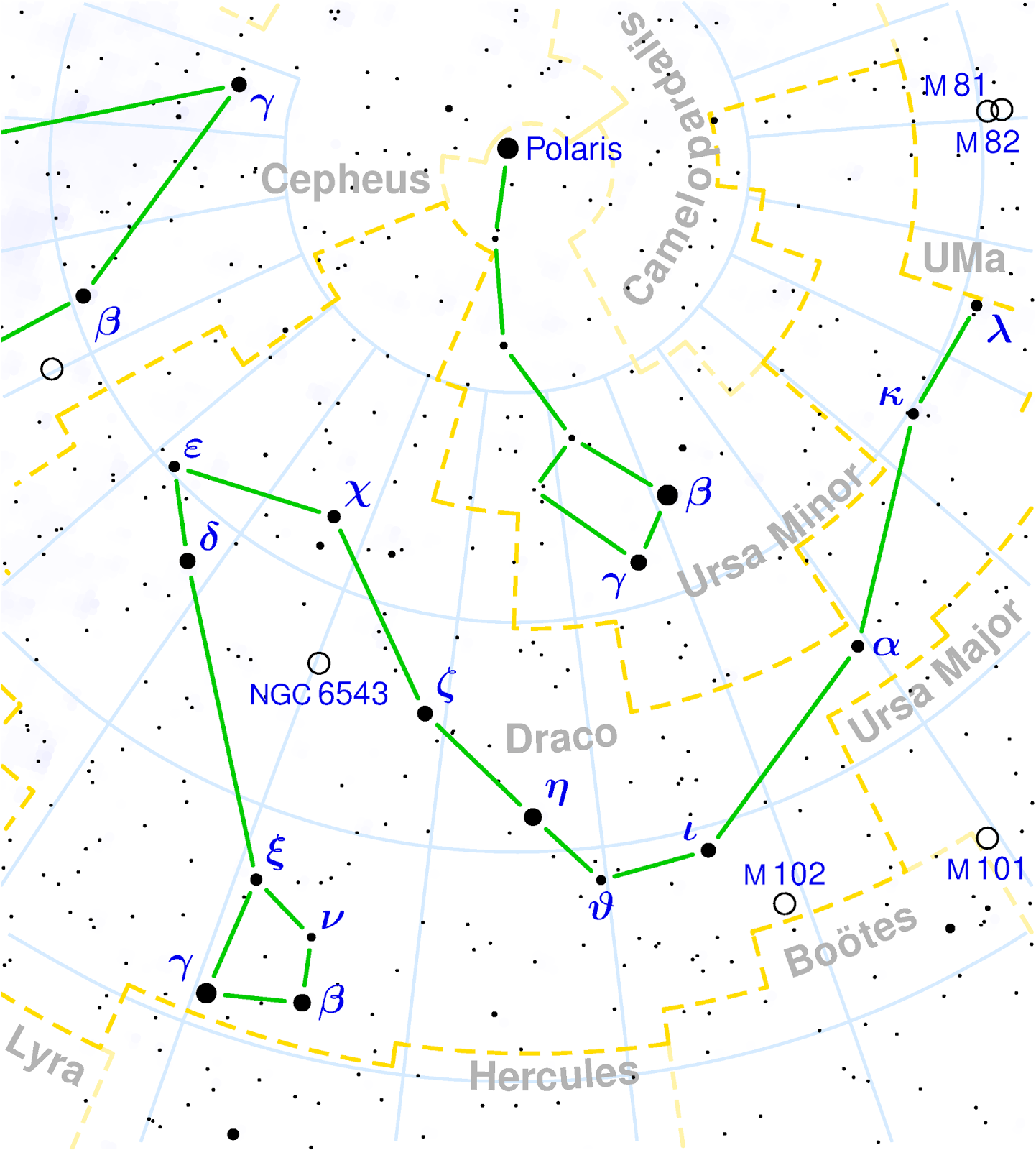
Draco, "the Dragon," is a sinuous
constellation that winds its way among the circumpolar constellations.
Face north and look high in the sky. Find the Big Dipper (Ursa Major), our March 2013
Constellation of the Month. The open
part of the bowl of the Big Dipper faces the smaller bowl of the Little Dipper
(Ursa Minor). The tail of Draco is about
halfway in between. Draco is comprised
relatively faint stars – more of the brightness of the stars of the Little
Dipper than those of the Big Dipper.
Follow the tail south, in the direction of Hercules, our July 2013. Then, Draco curves north in an arc around the
Little Dipper, heading toward Cepheus our October 2013 constellation. Then, Draco curves south again and ends with
a "head" formed by a quadrilateral of stars near Hercules.
The head is east of Vega, the very bright
star in the constellation Lyra, our August 2013
constellation. The 4 stars in the head
are among the brightest in the constellation.
That, and its compact size, makes the head relatively easy to find. So, you may want to start there, if you're
having trouble finding the tail.
Draco is home to the Cat's Eye Nebula, NGC
6643. This is a Planetary Nebula, which is the remnant of an
exploded star. A Hubble Telescope photo shows a complex interplay
of shapes structure, within the roughly spherical shape of the nebula.
(picture credit Wikipedia)
Subscribe to:
Posts (Atom)

 Posts
Posts

