The DC Women's Hiking Group will hike Thurs., June 4th at Seth Low Pierrepont State Park.
Entrance and parking is off Barlow Mountain Rd. across from Scotland and Barlow Mountain Elementary Schools.
Meet at 8:30am in parking area.

 It was a foggy, damp and still morning at Weir Farm and
we were hoping for the mist to burn off and the sun to peek out, which it
eventually did. A small blue egg was
found by one of the park employees, much to the delight of our group. Our trip through the woods to the pond
yielded some of the more common birds, such as the titmouse, chickadee,
chipping sparrow, nuthatch, mallard, goldfinch and catbird. The downy woodpecker was active in the dead
trees, and we learned that with practice, you can tell it apart from the hairy woodpecker, which is quite a bit larger
and has a noticeably longer bill than the downy. The red-bellied
woodpeckers teased us by being heard, but not seen, in the woods around
us.
It was a foggy, damp and still morning at Weir Farm and
we were hoping for the mist to burn off and the sun to peek out, which it
eventually did. A small blue egg was
found by one of the park employees, much to the delight of our group. Our trip through the woods to the pond
yielded some of the more common birds, such as the titmouse, chickadee,
chipping sparrow, nuthatch, mallard, goldfinch and catbird. The downy woodpecker was active in the dead
trees, and we learned that with practice, you can tell it apart from the hairy woodpecker, which is quite a bit larger
and has a noticeably longer bill than the downy. The red-bellied
woodpeckers teased us by being heard, but not seen, in the woods around
us. 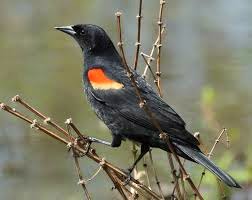 We all agreed that even though
spring seemed about two weeks behind this year due to a long winter, it was
nevertheless progressing and the birds were slowly returning. In the parking
lot we got a good view of a red-bellied woodpecker
after following its distinctively loud and shrill “kwirr” call. We saw many of
what Noah calls the “usual suspects” in the fields and woodlands at Bennett’s
Pond, like black-capped chickadees, American robins, Eastern bluebirds, common
crows, turkey vultures, blue jays, (was
it a red or white-chested?) nuthatch, and what we called an “LBB” or “little
brown bird,” but was probably a song
sparrow. For early returning
migrants, we saw both red-winged blackbirds
(picture - spotted last month at the Garden of Ideas), as well as the Eastern phoebe, a brownish-grey and
white flycatcher that is familiar to many for its raspy “phoebe” call. We
especially enjoyed seeing the waterfowl on the pond, such as pairs of shy wood ducks that took off when we got
too close, mallards, ring-necked ducks (also seen last month)
and the graceful mute swans. Wood ducks are magnificent birds, with
iridescent green crested heads with white stripes on the males and a chestnut
breast. The female wood ducks are rather
fancy too, with their grey-brown coloring, crested head and white eye
rings. The wood ducks live in wooded
swamps and nest in tree holes, taking advantage of nesting boxes like the ones
we saw placed in the shallow water at Bennett’s Pond. And perching on and flying out of those
nesting boxes were tree swallows,
looking more iridescent blue than green in the morning light. We watched a bunch of these brilliant
aerialists catching insects at the western edge of the pond, swooping
gracefully with their long pointed wings and notched tails. Also perched on
logs and grassy hummocks in the pond were numerous painted turtles soaking up
the sun, an extra bonus although outside of the bird category. After receiving
a tip from a fellow bird watcher, Noah was further rewarded for his
perseverance by seeing some hooded
mergansers in breeding plumage at one end of the pond after the rest of us
left, and some palm warblers, the
first returning warblers he had seen this year.
This rusty-capped small song bird has an unusual habit of wagging its
tail, exposing the yellow underneath.
Spring is indeed unfolding right before our very eyes!
We all agreed that even though
spring seemed about two weeks behind this year due to a long winter, it was
nevertheless progressing and the birds were slowly returning. In the parking
lot we got a good view of a red-bellied woodpecker
after following its distinctively loud and shrill “kwirr” call. We saw many of
what Noah calls the “usual suspects” in the fields and woodlands at Bennett’s
Pond, like black-capped chickadees, American robins, Eastern bluebirds, common
crows, turkey vultures, blue jays, (was
it a red or white-chested?) nuthatch, and what we called an “LBB” or “little
brown bird,” but was probably a song
sparrow. For early returning
migrants, we saw both red-winged blackbirds
(picture - spotted last month at the Garden of Ideas), as well as the Eastern phoebe, a brownish-grey and
white flycatcher that is familiar to many for its raspy “phoebe” call. We
especially enjoyed seeing the waterfowl on the pond, such as pairs of shy wood ducks that took off when we got
too close, mallards, ring-necked ducks (also seen last month)
and the graceful mute swans. Wood ducks are magnificent birds, with
iridescent green crested heads with white stripes on the males and a chestnut
breast. The female wood ducks are rather
fancy too, with their grey-brown coloring, crested head and white eye
rings. The wood ducks live in wooded
swamps and nest in tree holes, taking advantage of nesting boxes like the ones
we saw placed in the shallow water at Bennett’s Pond. And perching on and flying out of those
nesting boxes were tree swallows,
looking more iridescent blue than green in the morning light. We watched a bunch of these brilliant
aerialists catching insects at the western edge of the pond, swooping
gracefully with their long pointed wings and notched tails. Also perched on
logs and grassy hummocks in the pond were numerous painted turtles soaking up
the sun, an extra bonus although outside of the bird category. After receiving
a tip from a fellow bird watcher, Noah was further rewarded for his
perseverance by seeing some hooded
mergansers in breeding plumage at one end of the pond after the rest of us
left, and some palm warblers, the
first returning warblers he had seen this year.
This rusty-capped small song bird has an unusual habit of wagging its
tail, exposing the yellow underneath.
Spring is indeed unfolding right before our very eyes!
 Posts
All Comments
Posts
All Comments


