
 February’s bird walk was
quite a challenge with deep snow covering the golf course. Breaking trail with snowshoes required a lot
of work. After one hole, we were warmed up to coat unzipping level. But the day was perfect for birding – no wind and bright grey sky
which allows one to see finer detail at a distance. First bird of the day was the pileated
woodpecker, discovered by hearing its loud pecking sound. Nearly the size of a crow, this is the
largest woodpecker in our area. They
have a long neck, a conspicuous triangular crest (entirely red in males), and a
long chisel-like bill. They are famous
for creating rectangular shaped holes that are be so broad and deep, they can
cause a small tree to break in half. Clues
to their work are large chips of wood on the ground. Their favorite food is carpenter ants but
they are willing to consume numerous other woodboring insects, plus wild fruits
and berries. They have long, barbed tongues
which they use to extract their prey from deep within the wood. Like today, one generally hears them first;
hammering loudly and then you may catch their undulating flight pattern with
strong rapid wing strokes alternating with brief periods of wings folded at their
sides. They are very important to the
forest ecosystem. As primary nest
builders, their numerous excavations provide living quarters or shelter for
many other cavity loving animals, like wood ducks, bluebirds, mice & flying
squirrels. We also managed to spot two
small buteos – soaring hawks. They may
have been red-shouldereds but red-tails nest in that area too. The distance made positive identification impossible
which is a frustrating part of birding. So
without a doubt, the bird of the day was the magnificent pileated woodpecker. It was worth all the energy to see it.
February’s bird walk was
quite a challenge with deep snow covering the golf course. Breaking trail with snowshoes required a lot
of work. After one hole, we were warmed up to coat unzipping level. But the day was perfect for birding – no wind and bright grey sky
which allows one to see finer detail at a distance. First bird of the day was the pileated
woodpecker, discovered by hearing its loud pecking sound. Nearly the size of a crow, this is the
largest woodpecker in our area. They
have a long neck, a conspicuous triangular crest (entirely red in males), and a
long chisel-like bill. They are famous
for creating rectangular shaped holes that are be so broad and deep, they can
cause a small tree to break in half. Clues
to their work are large chips of wood on the ground. Their favorite food is carpenter ants but
they are willing to consume numerous other woodboring insects, plus wild fruits
and berries. They have long, barbed tongues
which they use to extract their prey from deep within the wood. Like today, one generally hears them first;
hammering loudly and then you may catch their undulating flight pattern with
strong rapid wing strokes alternating with brief periods of wings folded at their
sides. They are very important to the
forest ecosystem. As primary nest
builders, their numerous excavations provide living quarters or shelter for
many other cavity loving animals, like wood ducks, bluebirds, mice & flying
squirrels. We also managed to spot two
small buteos – soaring hawks. They may
have been red-shouldereds but red-tails nest in that area too. The distance made positive identification impossible
which is a frustrating part of birding. So
without a doubt, the bird of the day was the magnificent pileated woodpecker. It was worth all the energy to see it. Friday, February 20, 2015
Noah's Birding Log - Feb 2015
February’s bird walk was
quite a challenge with deep snow covering the golf course. Breaking trail with snowshoes required a lot
of work. After one hole, we were warmed up to coat unzipping level. But the day was perfect for birding – no wind and bright grey sky
which allows one to see finer detail at a distance. First bird of the day was the pileated
woodpecker, discovered by hearing its loud pecking sound. Nearly the size of a crow, this is the
largest woodpecker in our area. They
have a long neck, a conspicuous triangular crest (entirely red in males), and a
long chisel-like bill. They are famous
for creating rectangular shaped holes that are be so broad and deep, they can
cause a small tree to break in half. Clues
to their work are large chips of wood on the ground. Their favorite food is carpenter ants but
they are willing to consume numerous other woodboring insects, plus wild fruits
and berries. They have long, barbed tongues
which they use to extract their prey from deep within the wood. Like today, one generally hears them first;
hammering loudly and then you may catch their undulating flight pattern with
strong rapid wing strokes alternating with brief periods of wings folded at their
sides. They are very important to the
forest ecosystem. As primary nest
builders, their numerous excavations provide living quarters or shelter for
many other cavity loving animals, like wood ducks, bluebirds, mice & flying
squirrels. We also managed to spot two
small buteos – soaring hawks. They may
have been red-shouldereds but red-tails nest in that area too. The distance made positive identification impossible
which is a frustrating part of birding. So
without a doubt, the bird of the day was the magnificent pileated woodpecker. It was worth all the energy to see it. 
Monday, February 2, 2015
Groundhog Day 2015
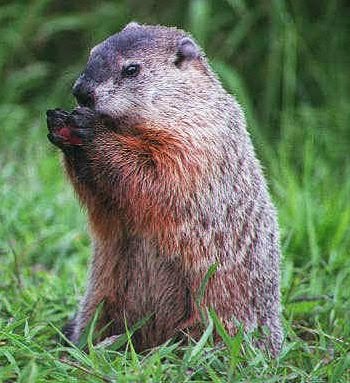
Groundhog Day has its roots deep in the past when nature’s
cycles dominated one’s life. It falls
between the winter solstice and the spring equinox when in the far Northern Hemisphere
winter is at its deepest. At this point
it was important to determine if there was enough food and hay to last till
spring and what adjustments must be made.
Traditions developed to hone in on the date, have evolved over the eons. Some say
the early Christians took the Gaelic festival of Imbolc and converted it to
Candlemas. For centuries this was the
day that the clergy blessed candles and distributed them to the people. Thus reassuring their followers that the
light will continue to grow and the dark of winter was behind them. Regardless of whose traditions one quotes,
this day revolves around the sun. How a
groundhog got involved seems to go back to German folklore where the prognostics
were a badger or bear or a hedgehog. It
peeps out of its winter quarters and if the day is sunny, goes back to sleep
for another 6 weeks. If the day is
cloudy, it stays out to enjoy the mild weather. German settlers brought this tradition to
American, specifically Pennsylvania.
There groundhogs were in abundance and thus took center stage. It is said the first recorded celebration
took place in Morgantown, PA in 1841. Now the largest celebration is held in
Punxsutawney, PA where large crowds have gathered since 1886 to hear Phil’s predictions. However, in CT we have our own prognosticating
rodent, Chuckles VIII. Unlike Phil who
claims to be 125 years old and drinks a magic elixir to maintain his youth,
Chuckles comes from a long line of diviners.
According to his handlers at the Lutz Museum, Chuckles takes a more scientific
approach by “consulting with meteorologists, examining radar data, and reading
the Farmer’s Almanac.” Chuckle’s conclusion:
2015 will have 6 more weeks of winter.
Wednesday, January 28, 2015
Wednesday, January 21, 2015
Birding with Noah - Jan. 10, 2015
 |
| Noah Sferra |
It was a brisk but sunny morning near Lake Windwing, but
birds are not "bird brained" at all.
If you want to find them, look for warm, sunny spots sheltered from the
wind. We had luck on the far, sunlit
side of the lake where there was quite a flurry of activity near the water's
edge. It was surprising to learn that
some birds, like bluebirds, change their diet from insects to fruits and seeds
during the winter months. But others,
like goldfinches, can remain year-round because their diet is all seeds. Berries such as winterberry, juniper, &
holly are an important food source. As
are the highly invasive oriental bittersweet’s orange berries. Noah observed that during his youth, he never
saw robins in the winter but looked for their red breasted appearance and
"cheer-up cheerily" call to herald in the springtime. Possibly climate change, population pressures
and habitat factors account for the observation that robins and other birds
that used to migrate south are staying through the New England winter. We saw cardinals, chickadees, nuthatches,
titmice and dark eyed juncos which Noah called the "usual
suspects". Also, we observed a
white-throated sparrow, song sparrow, and a female red-bellied woodpecker
climbing up a trunk. Noah instructed us
in a few basic good birding tips: 1)
Don’t point your finger at the birds as this seems to scare them away (although
talking does not seem to bother them).
2) Don't use your bird apps to play recorded bird calls, especially
during nesting season, as this possibly effects the establishment of
territories. 3) Don't let everybody
"pish" (a sound that mimics the warning cry of certain species) in
order to flush birds them out. Instead,
if this appears necessary, designate one person to do it. The morning ended with the sight of 4-5 crows
chasing a red tailed hawk with raucous cries and dive bombing the poor fellow
until he moved on. This is called
mobbing. The walk proved that there are
plenty of birds to spot in the winter months, all you have to do is bundle up
and know where to look. Photo (http://en.wikipedia.org/wiki/White-throated_sparrow)
Monday, January 12, 2015
Lovejoy Comet is Here!
 Over the next two weeks, the Lovejoy Comet (C/2014 Q2) is
making an appearance in our early-evening skies. If you are fortunate to have a dark sky and
good vision, it is dimly visible to the naked eye. Otherwise
we strongly recommend using binoculars or low-power, wide field telescope. It is a long-period comet with an orbit of
about 11,500 years. So if you happen to
miss it, it will return in about 8,000 years.
Like most comets, it has a greenish head. This is the result of diatomic carbon
molecules (C2) fluorescing in ultraviolet sunlight while it travels
through the near-vacuum of space. The tail, which always points away from the
sun, is tinted blue from the fluorescing of carbon monoxide ions (CO+). Its overall whitish appearance is from dust
reflecting the sunlight. It is 44
million miles away and traveling 3° overhead a night which is fast enough so
that it may move during a viewing session.
It will be nearest to the sun on January 30th, a mere 120 million miles
away. The comet is named after its
discoverer, Australian amateur astronomer Terry Lovejoy. He discovered it on August 17, 2014. It is the 5th comet he has
discovered from his Brisbane, Queensland home.
There are numerous web-sites providing information on how to locate the Lovejoy
comet. You can find them by typing “Lovejoy
Comet 2014” in your search engine. Photo
by Paul Stewart, http://en.wikipedia.org/wiki/C/2014_Q2_%28Lovejoy%29
Over the next two weeks, the Lovejoy Comet (C/2014 Q2) is
making an appearance in our early-evening skies. If you are fortunate to have a dark sky and
good vision, it is dimly visible to the naked eye. Otherwise
we strongly recommend using binoculars or low-power, wide field telescope. It is a long-period comet with an orbit of
about 11,500 years. So if you happen to
miss it, it will return in about 8,000 years.
Like most comets, it has a greenish head. This is the result of diatomic carbon
molecules (C2) fluorescing in ultraviolet sunlight while it travels
through the near-vacuum of space. The tail, which always points away from the
sun, is tinted blue from the fluorescing of carbon monoxide ions (CO+). Its overall whitish appearance is from dust
reflecting the sunlight. It is 44
million miles away and traveling 3° overhead a night which is fast enough so
that it may move during a viewing session.
It will be nearest to the sun on January 30th, a mere 120 million miles
away. The comet is named after its
discoverer, Australian amateur astronomer Terry Lovejoy. He discovered it on August 17, 2014. It is the 5th comet he has
discovered from his Brisbane, Queensland home.
There are numerous web-sites providing information on how to locate the Lovejoy
comet. You can find them by typing “Lovejoy
Comet 2014” in your search engine. Photo
by Paul Stewart, http://en.wikipedia.org/wiki/C/2014_Q2_%28Lovejoy%29
Subscribe to:
Posts (Atom)

 Posts
Posts


